
Migrant workers unite to combat misinformation and disinformation
10/29/20251 min read
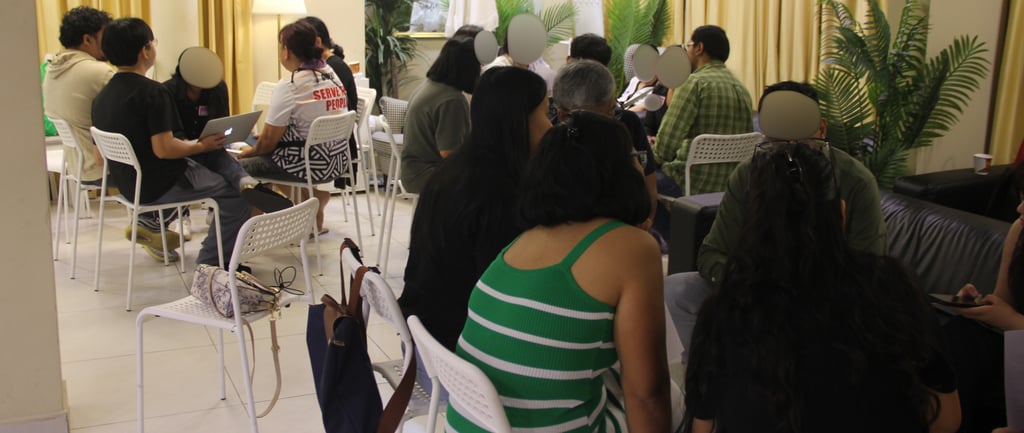

About forty Filipino migrant workers from several migrant organizations gathered for a hybrid discussion on how to combat misinformation and disinformation. Participants came from Jordan and the United Arab Emirates.
The session started by asking participants about how they verify information, especially when the information concerns migrant-specific narratives. Key points from the presentation were 1) types of information that can be fact-checked, 2) red flag indicators commonly exhibited by deceptive social media accounts and pages, 3) methods for confirming the authenticity of photos and videos circulating on social media, and 4) practical tips for conducting background research with search engines such as Google.
Participants were taught simple online methods for verifying multimedia content. Examples included using Google Lens or TinEye for reverse image searches to identify whether an old photo has been recycled to misrepresent a current event. There was also a brief demonstration of how to use geolocation by using inline maps and street views to verify location of footage captured on mobile devices and posted as news.
While many pieces of information can be fact-checked with these verification techniques, countering disinformation requires critical analysis of the content itself. Testimonies from migrant workers revealed that certain social media pages and Youtube channels specifically target Filipino migrants and aim to sway public opinion in favor of ruling factions in the Philippines, either the Dutertes or the Marcoses. These pages propagate distorted narratives on what actually happened in the Philippines and frame perpetrators of violations and arrested officials as victims.
Participants noted that combating such narratives necessitates having a comprehensive understanding of the political, social, and economic conditions not just of migrant workers but also of their home countries. Developing this concrete grasp of issues equips migrants to debunk false claims and to share accurate information with their communities.