
A Glimpse on the Lives of Filipino Migrants in Jordan
Official government statistics from the Philippine Foreign Service Institute indicate that there are around 42,000 Filipino migrants working in Jordan. However, testimonies from Filipino migrants themselves say that the actual number is about 48,000. Regardless of the number, the question remains: why are there tens of thousands of Filipinos in a country 8,800 km away from the Philippines and what do their daily lives look like?
5/29/20253 min read
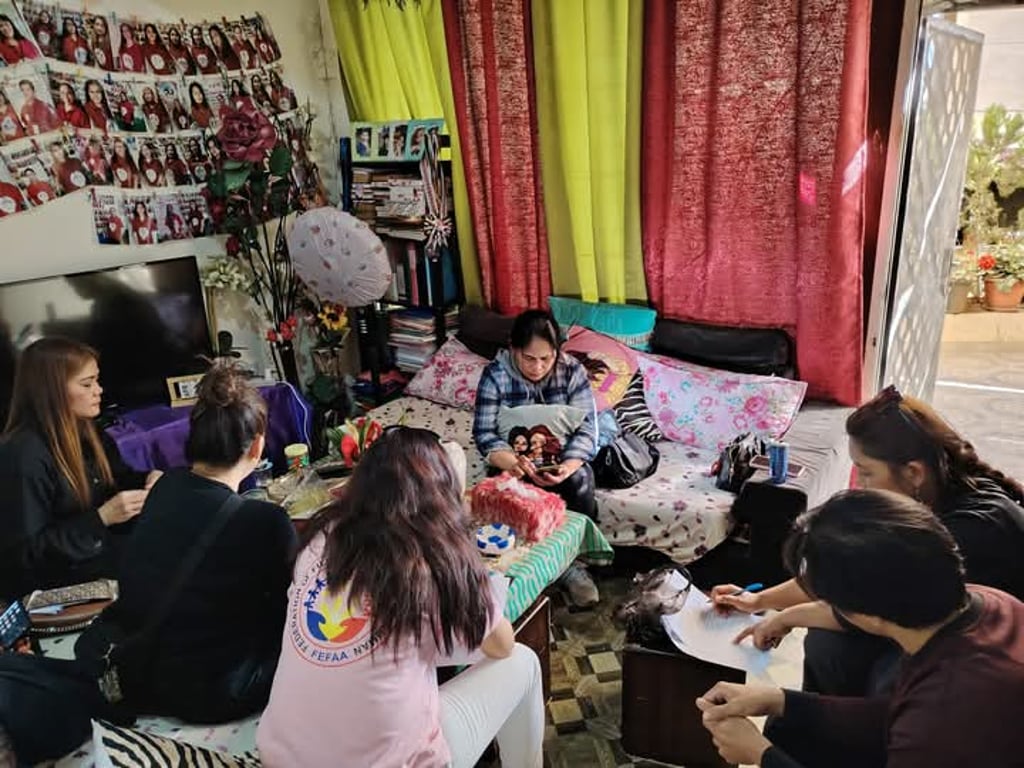
Migrante Middle East, in partnership with the World Association for Christian Communication (WACC), attempted to answer these questions under the project “Promoting Communication Rights of Migrant Workers in Jordan and the Middle East” through focus-group discussions (FGDs), key informant interviews (KIIs), desk research, surveys, and participant observation.
This write-up is part of the series of articles on communication rights published in tambuliabroad.com.
Jordan as a host country
Jordan has a little over 11 million people and is located in a region with a very unstable political situation due to its geographic proximity to neighboring country, Israel. To illustrate, Amman is just 210 km away from Tel Aviv, a 4-5 hour drive. The prolonged conflict between Israel and Palestine has had a profound impact on Jordanian society and has deterred genuine development in the country.
Jordan is trying to maintain a strategic position in the Middle East, serving as a conduit for trade and communications between Asia, Africa and Europe. It is a key ally of the United States and has signed a peace treaty with Israel in 1942. Jordan is predominantly Muslim (96 percent) with a small Christian minority (4 percent). Its population is mostly Arab, with smaller communities of Armenians, Caucasian peoples, and Kurds. Distribution of workforce by industry in Jordan reveals its underdeveloped economy despite its oil shale deposits. Majority (64 percent) of the workforce is in the service sector, while 30 percent is in the industry sector, and a nil 6 percent in agriculture. Prices of local commodities are high because they are heavily reliant on imports. Massive foreign aid keeps the Jordan economy afloat.
Jordan both receives migrant workers and sends its own citizens abroad. Mass out-migration was observed during the Saudi and Gulf oil economy boom. Persistence of conflict in the region has made the borders of Jordan home to hundreds of thousands of international refugees. This has attracted several international NGOs.
Filipinos in Jordan
The majority of Filipino migrant workers in Jordan are female (95 percent) and are employed in the service sector as caregivers, salon workers, and domestic workers, either under “live-in” or “live-out” arrangements. The average monthly salary of domestic workers is 350 JOD, approximately 500 USD or 29,000 PHP.
According to key informants, most Filipinos enter Jordan via the legal, regular procedure which is typically through a sponsor called “Kafala” in the local system. But among the 42,000+ Filipinos in Jordan now, there is a significant portion of undocumented and overstaying migrants. Official statistics estimate this number at 50% of Filipino migrant workers, whereas key informants attest it is about 75%.
Participants in the FGDs and interviews share the same views regarding the major concerns of Filipino migrants in Jordan which are: 1) the Kafala system and the corresponding confiscation of passports by employers; 2) the high number of “undocs” (undocumented workers); 3) low wages; 4) long working hours; and 5) host-country restrictions on migrant rights.
In 2024, the King of Jordan granted General Amnesty to overstaying migrants in accordance with the 100-year tradition of granting pardons. However, many Filipino migrants failed to avail themselves of the amnesty due to a variety of factors. First, the announcements were made in Arabic which Filipinos found difficult to understand. Filipino migrant workers narrated that the Philippine Embassy was overall negligent in assisting their fellow kababayans, especially in translating the amnesty announcement and related documents. Second, there was confusion whether there were penalties required to avail the amnesty, which were reported to be at 1.5 JOD per day or 450 JOD per month. Testimonies from Filipinos say that the Philippine Embassy only helped in repatriation cases where no penalties were required.
After the period of granting the Jubilee Amnesty, there were massive arrests carried out. There were random checks of documents, particularly among Filipino and Egyptian migrants. As of February 2025, an estimated 2,500 migrants have been deported. There is no data available regarding the nationalities of those deported.
Social landscape of Filipino organizations in Jordan
Coming from a predominantly Catholic nation, Filipinos in Jordan congregate in church activities at the Catholic parish in Amman, whose parish priest is also a Filipino—Rev. Father Gerard Metal. Hundreds of Filipinos regularly attend religious and community service activities.
Traveling around Jordan, you will normally meet Filipinos who have been staying in the country for ten years, with some even longer than twenty years. They have formed their own civil society organizations such as the Federation of Filipino Associations in Amman, Jordan (FEFAA), United Filipino Organization (UFO), Filipino Organization (FilOrg), and Jordan Chapter Organization (JCO). They conduct sports festivals, hold activities for the rights and welfare of Filipino migrants, and actively participate in embassy-sponsored celebrations. Another new Filipino organization, Pinta Kultura, is a group of Filipino artists based in Jordan. They narrate the stories of Filipino migrant workers through art and cultural activities such as mural painting.